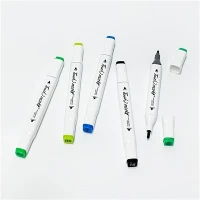

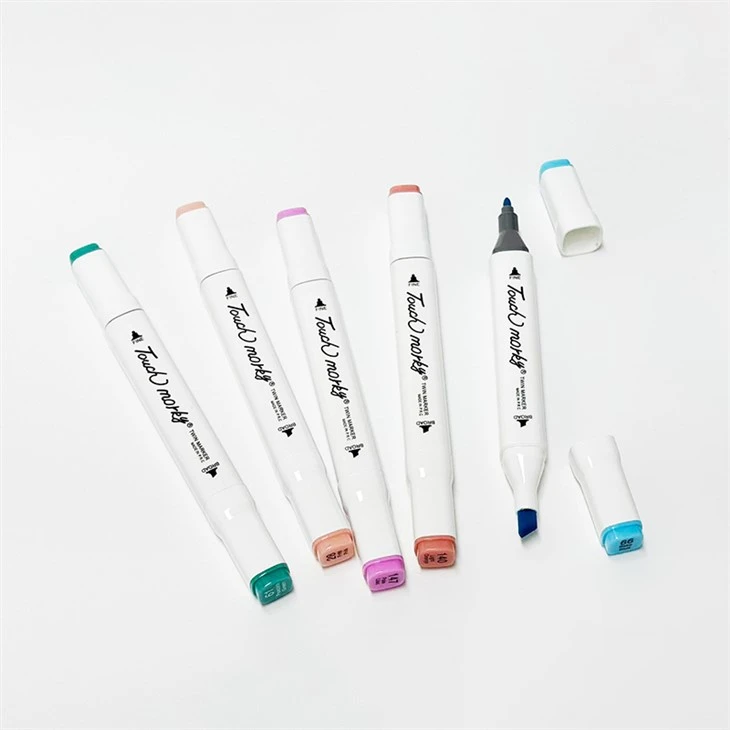
Alcohol Dual Tip Markers
Alcohol Dual Tip Markers feature two writing tips in one barrel, typically combining a fine tip for detailed lines and a broad chisel tip for coloring and larger-area coverage. The alcohol-based ink supports smooth color application, quick-drying performance, and blending effects for illustration, sketching, and coloring. The dual-tip structure allows users to switch between outlining, shading, and filling without changing markers. Tip configuration, ink color, and line width determine the marker's application range and overall drawing performance.

Specifications
| Parameter | Specification |
|---|---|
| Product Type | Alcohol Dual Tip Markers |
| Ink Type | Alcohol-Based Ink |
| Dual Tip Design | Yes |
| Tip Type | Fine Tip / Broad Tip |
| Tip Material | Fiber / Polyester / Nylon |
| Tip Size | Customized |
| Ink Colors | Standard Colors / Custom Colors |
| Ink Effect | Classic |
| Barrel Material | PP / ABS / AS |
| Color Count | 6 / 12 / 24 / 36 / 48 / 60 Colors / Custom |

Dual Tip Configuration & Functional Matching
- Fine Tip for Detailed Application
The fine tip is designed for narrow lines, outlines, and small-area detailing. Its tip dimensions and material influence line definition, ink delivery, and control when working on intricate illustrations.
- Broad Tip for Larger Coverage
The broad tip supports wider strokes and more efficient color application across larger areas. Its shape and contact width affect ink coverage and the consistency of filled sections.
- Dual-End Specification Matching
The fine and broad tips need to be matched with the same ink system to maintain compatible writing performance at both ends. Tip material, dimensions, and ink flow requirements should be considered together during product configuration.
- Tip Combination & Product Configuration
Different tip combinations can be selected according to the intended product positioning. Fine and chisel configurations, for example, provide different line characteristics for detailing, outlining, and broader color application.
Alcohol Ink Formulation & Color Performance
- Color Intensity & Transparency
Alcohol-based ink produces color effects that depend on pigment or dye characteristics and ink concentration. Color intensity and transparency influence the appearance of individual strokes and the coverage achieved during repeated application.
- Color Blending & Layering
Alcohol ink can support blending and layered coloring techniques. Applying adjacent or overlapping colors allows users to create gradual transitions and variations in tone, depending on the ink formulation and paper surface.
- Quick-Drying Characteristics
Alcohol-based ink generally dries relatively quickly after application. Drying behavior varies with ink composition, paper absorbency, and the amount of ink deposited, affecting the time available for blending and layering.
- Color Consistency Across the Range
Maintaining consistent color appearance across a marker assortment requires attention to ink formulation, color references, and production batch control. This is particularly important for multi-color sets where individual shades need to work together as a coordinated range.
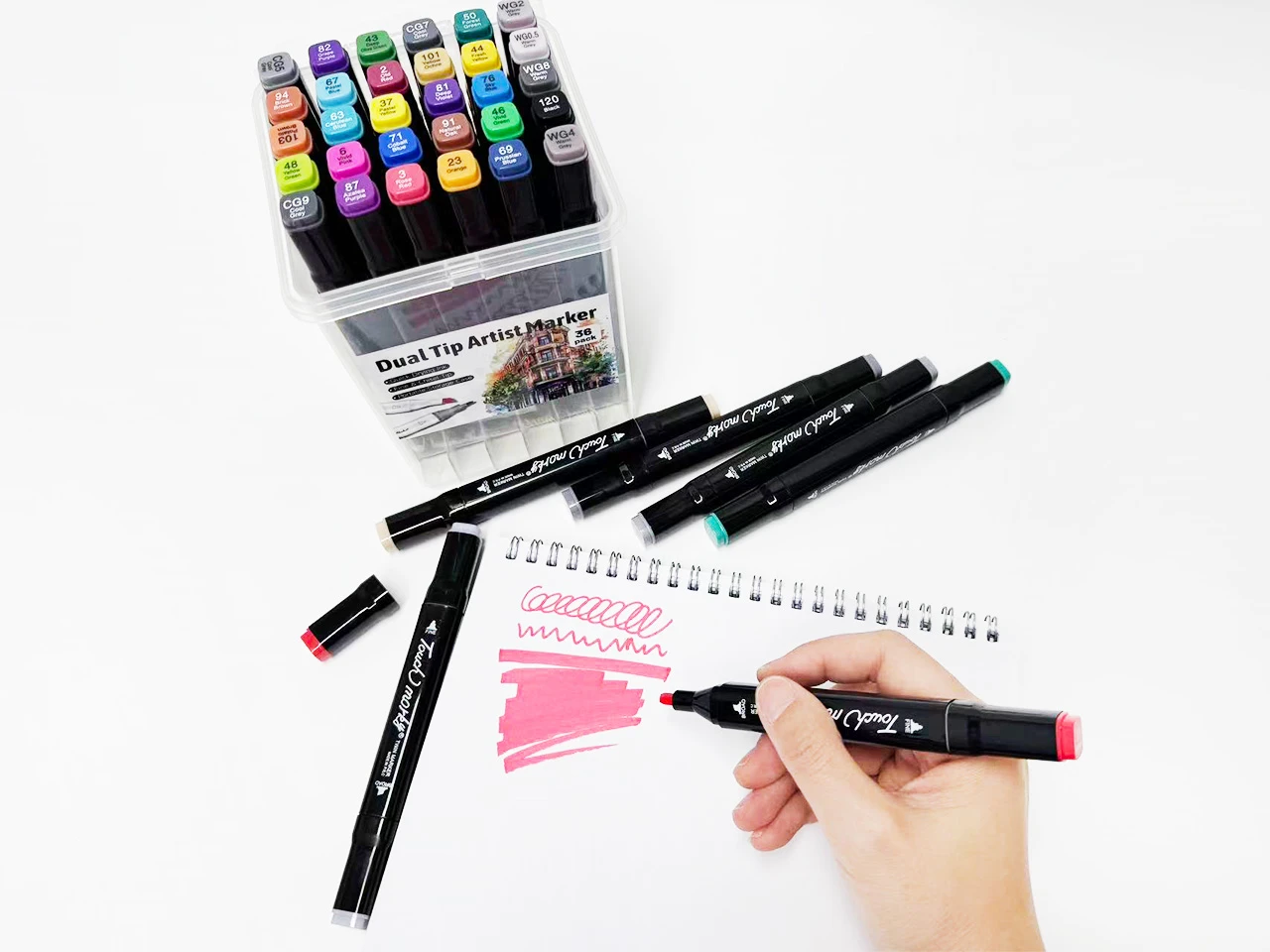
Alcohol Dual Tip Markers OEM Customization
Dual Tip Configuration Development
Qianxiang supports OEM configurations for different tip combinations, including fine and broad tips. Tip dimensions, shapes, and materials can be specified according to the intended product design and drawing requirements.
Ink Color Range & Set Configuration
Custom color assortments can be developed for different marker collections. Options include standard color ranges, coordinated color combinations, and multi-color sets with 6, 12, 24, 36, 48, or 60 markers, subject to the selected specifications.
Barrel Design & Brand Identification
Barrel colors, exterior designs, and logo printing can be configured according to customer artwork and branding requirements. These specifications can be coordinated with the overall marker appearance and product positioning.
OEM Packaging & Product Assembly
Packaging formats and set arrangements can be developed for individual markers or multi-color collections. Pen quantities, color sequences, product presentation, and packaging artwork can be confirmed before mass production.
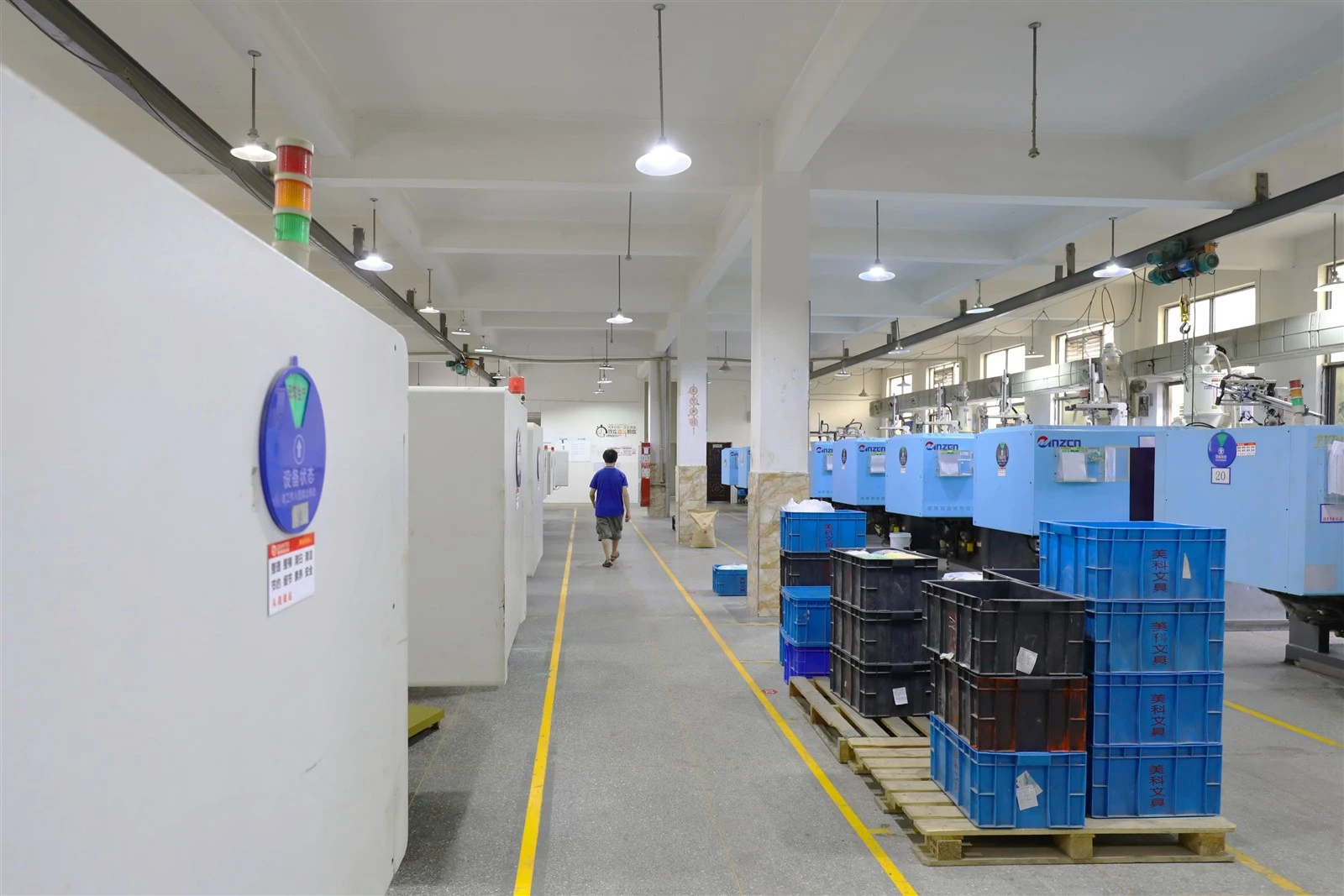
1. Incoming Material Inspection
Incoming barrels, tips, caps, refills, and other components are checked against the corresponding specifications. Material appearance, dimensions, and component condition are reviewed before production use.
2. Production Process Inspection
During manufacturing, inspection focuses on component assembly, printing appearance, refill processing, and filling operations. Process checks help identify visible defects and assembly deviations before products move to the next stage.
3. Finished Marker Functional Testing
Finished markers are sampled for writing continuity, ink delivery, tip condition, and cap fitting. Both ends of the marker are checked to verify that the dual-tip configuration functions according to the approved product specifications.
4. Final Appearance & Packaging Inspection
Before shipment, finished products are checked for barrel appearance, logo printing, component assembly, color assortment, and packaging condition. Set contents and quantities are also verified against the approved order specifications.
FAQ
Are alcohol markers suitable for use on ordinary copy paper?
Alcohol ink may bleed through or show through thin copy paper because of its solvent-based properties. Thicker marker paper or specially designed illustration paper is generally more suitable for coloring and blending applications.
Can alcohol dual tip markers be used with colored pencils or other art media?
Yes. They can be combined with colored pencils and other drawing materials in mixed-media artwork. However, the order of application and compatibility of different materials should be tested to achieve the desired result.
Can alcohol ink markers be used on non-porous surfaces?
These markers are primarily designed for suitable paper-based applications. Their adhesion and drying behavior on plastic, glass, metal, or other non-porous surfaces may vary, so they should not be considered permanent surface markers unless specifically tested for that purpose.
Can alcohol dual tip markers be used for professional illustration projects?
They can be used for character design, fashion illustration, product sketching, and concept artwork. The suitability for professional applications depends on color selection, blending characteristics, tip control, and the artist's preferred paper.