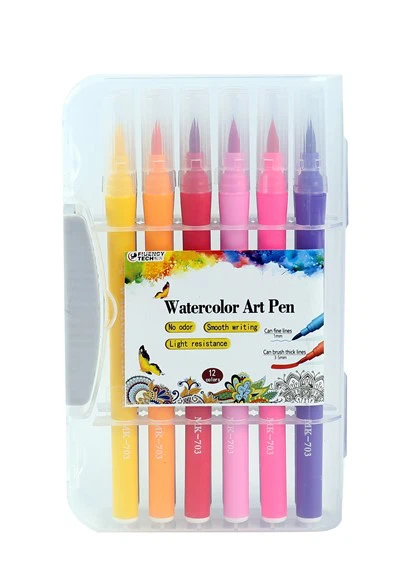
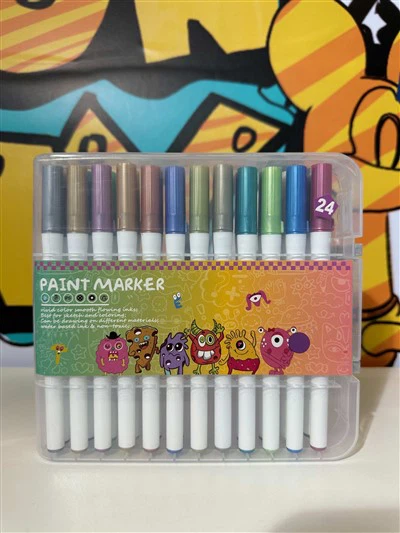
Brush Marker Manufacturer for OEM & Custom Stationery Solutions

Brush Markers feature flexible brush tips that create smooth strokes, varied line widths, and expressive coloring effects for illustration, lettering, and creative projects. ColoringBoom manufactures Brush Markers for stationery brands, retailers, and distributors, offering customization options for ink colors, barrel designs, logo printing, and packaging. With experienced production capabilities, we support OEM projects and reliable bulk supply for global customers.

Brush Marker


What is Brush Marker?


Brush markers are a type of coloring tool that combines the versatility of a brush with the convenience of a marker. They can be used to create borders and detail on paper crafts, drawings, and paintings. The best brush tip markers will provide you with a wide variety of colors.


Why Choose Us?

Rich Experience

Hangzhou Qianxiang Import and Export Co., Ltd., established in 2005, is a professional stationery manufacturer integrating R&D, production, design, sales and service.

Professional Technical Team

The company has advanced production equipment, rigorous management system and professional production team, effectively ensure the quality of products, improve the service to customers.

Reliable Product Quality

Our company has passed the BSCI, European CE (EN71), ISO9001:2000 and other quality management system certification, and has been recognized by international famous brands and large supermarket customers.

Wide Product Range

The main products of our company are color gel pen, marker, watercolor pen and crayon and other stationery items, mostly but not only writing instruments. We are also committed to the development of kit products and fun products, to adapt to the needs of different customers.

First 123 Last 1/3
 
Advantages of Brush Marker
 
01/

Brush markers are flexible
What’s the first good thing about these tools?
They’re able to create both vibrant, thin, and wide strokes that can match your artwork’s beauty. As a result, their flexibility makes it fun to work on any project you’re working on, including:
Painting
Sketching
Illustration
Calligraphy

02/

Variety of Brush Makers’ colours and types
Just like any art tool, they have a lot of rich colours for your different artworks.
Another advantage is that brush markers come in different types you can choose from.

03/

Affordable and accessible
When you’re on a budget, brush markers are the ones you can count on.
Besides being easy to use, even for beginners, they’re available in many online shops and are more affordable compared to buying traditional brushes and paints.
For example, water brush markers are affordable because they’re refillable, removing the need for a lot of replacements.

04/

Portability and convenience
If you’re an artist who loves to travel and bring out their artistic side even outdoors, brush markers are perfect for you!
They can be your travel buddies because they are lightweight, which makes them easy to carry around.
These pens also don’t need other supplies like separate ink or water containers because they already have one in them.

05/

Enhancing artistic techniques
Brush markers can be used for many artistic projects, including calligraphy and painting.
This is the best way to help you build new skills like pressure control and blending that are needed for a specific project.
Their flexibility can allow you to experiment with different styles and art techniques.

06/

Unique features of brush markers
The combined traits of a pen and brush make them lovable tools for artists.
It lets you precisely control the pen, but with the brush tip’s flexibility, you can also easily create different strokes.
So, it also makes it easier to blend and create many effects, like watercolour.


Types of Brush Markers


Brush Tip Marker Pen Set

Alcohol-Based Markers

These markers use alcohol as a solvent for the ink, resulting in quick-drying, vibrant colors.

Mildliner Brush Pen Set

Water-Based Markers

Water-based brush markers use water-soluble ink, which makes them ideal for creating watercolor-like effects.

Art Brush Marker Pen

Acrylic-Based Markers

Acrylic-based brush markers contain acrylic ink, offering permanent, opaque colors suitable for various surfaces, including paper, wood, and canvas.


Application of Brush Marker


Lettering
So of course, the first thing you can do with brush markers is lettering. I still wanted to include this as brush markers can really take your bullet journal headers to the next level. To learn how to really get the most out of your brush one line variation check out this blog to get practicing. But, you can literally use the smaller nib on brush markers as a regular fineliner! The small nib is lovely and firm, so you don't have to learn how to create line variations if you don't wish!


Highlighting
brush markers actually make really great highlighters for spotlighting important text in study notes, colour coding or simply making any text prettier! Above you can see I used the small and the large nib nibs in different ways to make certain parts of the text highlighted. The larger brush marker nibs are great for fully highlighting the words, and with smaller brush marker nibs you can underline, do smaller highlights and even circle in fun ways.


Shadows
Next up you can add shadows and dimensions to bullet journal headers and even drawings! Depending on what you're adding shadows to, you may want a large or smaller nib. Some ideas of things to add shadows to include task boxes, headers, line drawings, and lettering. It really adds more depth to any creation!


Colouring + Drawing
Another fun thing to use brush markers for is colouring and drawing! This can be on colouring books/sheets, or in your own creations. The small nib brush markers are particularly good for getting line variation in drawings, For example on the leaf branches, by adding more pressure as I drew the line, I was able to get the effect of the branch getting thicker. It also can create a shadow effect without using a second pen. The large nib brush markers are then good to fill larger areas!


Watercolour
One way I love using brush markers is like watercolours. Simply lay down ink on a plastic/porcelain surface (ideally use a larger nib brush marker) and pick up with a wet watercolour brush. This way you can literally use the ink like watercolours! I like this method in particular as you can get a nice even coverage, which is harder to achieve simply colouring! That way you can adjust your technique to what you personally prefer!


Watercolour Effect
To do this, simply add your chosen 2/3 colours to a sheet of plastic. Next add water and mix slightly with a paintbrush. The image on the left had less water and the one on the right has more, so adjust depending on the effect you're aiming for. Once happy, transfer the ink onto the page by placing it on the paper and gently pressing down the plastic so the colours spreads to your chosen amount. And done!! You have amazing watercolour effects for drawing, craft projects and bullet journal headers!!


Qualities of Brush Marker Behavior
 

Material of the Tip
A brush marker comes with a tip that can be made from several different kinds of materials.
Natural hair bristles are traditionally from the hair of a sable or a weasel. These tips tend to mimic the behavior of a real brush better than other brush markers.
Synthetic tips are generally made of nylon. They closely mimic the behavior of brushes, but are slightly easier to handle.
Felt tips are made from plastic. They tend to be more firm and require less control for producing consistent lines.


Hardness of the Tip
Brush marker tips can range from soft to firm. Softer tips allow for a greater degree of line variation, but will require more control to do. Firm tips can produce good line variation, but will require more pressure.
Bristle tips tend to fall on the softer side, while synthetic and felt tips tend to be more firm.


Size of the Tip
Despite what they says, size doesn’t always matter. brush markers come in a variety of tips sizes. These are typically labeled as broad or fine.
Broad tips are great for bold strokes. Fine tips are great for minor detailing and smaller applications or compositions. The degree of line width variation a brush marker is capable of is based on the size and hardness of the nib.


Elasticity of the Tip
The tip’s ability to retain its original shape after after a stroke determine’s its elasticity. If the tip has good elasticity, it will bounce right back to it’s original shape after each stroke. Typically, When you apply pressure to a bristle tip, the bristles will to spread out and require reshaping of the brush. Synthetic tips and felt tips tend to have good elasticity.


Ink Flow of the Tip
How much ink flows through the tip when pressure is applied determines the ink flow. This is measured as wet, medium, or dry.
Wet tips have a higher degree of flow and produce consistent dark lines, even if you are writing fast. On the the other hand, they can also blob up and create ink splotches if you’re pressing hard and moving slow.


How to Use Brush Marker


Check out your palette!
Take a good look at your brush marker babies--- aren’t they pretty? But don’t just gush about them; take this time to observe and organize your palette. It's usually helpful to put similar colors close to each other as they're usually the ones that blend well when combined.


Make sure you're using the right kind of paper.
Water-based ink can eat through ordinary printer paper, so make sure you're using thick and smooth watercolor paper to achieve the best results.


Watercolor brush markers use water-based ink, so keep a little glass of water beside you as you work.
When you dip the brush tips in water, you'll dilute the ink which produces lighter shades. Remember: the longer you dip the brush tip in water, the lighter the outcome. Play around with water until you become familiar with its effect on your brush markers. This will be very useful when you’re making color washes and shading.


Shading and layering.
Blend colors by laying one shade on top of another. Work from light to dark tones. You can also mix and match: play around with your markers and know which colors work best when combined.


Creating ombre effects.
You can also touch or rub two marker tips together to create gradient or ombre effects. Select colors within the same family to get best results for this technique. Make sure that one pen has a darker shade than the other. Apply the darker brush tip to the lighter one. You know you're ready to apply when the lighter pen has absorbed some of the darker ink. You should get a pretty dark-to-light gradient effect.


Get the hang of the brush tip.
The brush marker tip is pretty versatile: it’s capable of making a variety of strokes depending on the amount of pressure you apply. If you create strokes with minimal pressure, you'll get thin lines--- this is great for when you're working on details. To cover larger areas and to produce thicker strokes, hold your brush marker at around 30 degrees and apply more pressure. Practice doing thin upstrokes and thick downstrokes. You'll be using this technique a lot when you're doing hand lettering and calligraphy.


Don't forget to "clean" your brush tips out after blending them together.
Dip them in water and lay strokes on a scrap piece of paper until the brush markers go back to their original color.


Coloring Gel Pen


Do You Need Special Paper for Brush Markers?

It’s best to use very smooth paper with your brush markers to keep the tips from fraying. Some paper feels smooth to the touch but is still rough on brush markers. The best paper for brush markers is paper that has a very smooth finish due to additional processing.


Although brush markers will wear out eventually, using smooth paper makes them last as long as possible.


Any rough paper that has a lot of texture or tooth will rip at the fibers of a brush marker tip, and even mildly textured paper will wear on them over time. This results in frayed tips that are frustrating to use.


When a brush marker tip is frayed, you’ll know it. Fraying becomes clearly visible on marker tips, and you’ll also notice it when using the pen. They cause fuzzy lines and stray marks when you write, and you won’t be able to get clean lines.


Some brush markers have reversible tips, but otherwise, there’s not much you can to do to repair frayed marker tips. This is why it’s important to use smooth paper!
There are some brush markers that have tips like a paintbrush, with individual bristles. These kinds of brush markers won’t fray like others, so you don’t have to use smooth paper with them.


There Are a Few Characteristics That Will Set Brush Markers Apart


1
productcate-1-1

Ink flow

This will define whether the ink is more wet or more dry. Depending on the ink flow, you can create a whole bunch of effects with the pen. Drier pens will create a more textured, and sometimes distressed, look, while wet pens will make your art saturated.

2
productcate-1-1

Nib style

There are three main types of brush marker nibs: felt tips, nylon tips, and synthetic hair. You may want to start with felt tip, as those are the easiest to learn with and more common.

3
productcate-1-1

Elasticity

Tips come in different elasticities. A firmer elasticity will mean you can get a bolder effect with the pen. Synthetic tips tend to have good elasticity, meaning they will quickly return to their shape when you use pressure.

4
productcate-1-1

Size of the tip

This will also change the outcome of your lettering. A small tip will result in fine lines while a broad tip translates to bold strokes.


Factors Affecting Brush Marker Functions


Construction and Material
Brush markers come in various tip types divided into two major categories: bristle brush tips and molded felt tips.
The bristles can have strands of synthetic or natural hair fibers. Synthetic brushes are mostly made out of polyester or nylon, while natural hair fibers come from animal hair, typically from sable, weasels, squirrels, or many others.
Preformed tips are made with felt most of the time. It is produced using compacted synthetic fibers and rubber.


Tip Sizing
Brush marker tips are usually available in fine, medium, and broad sizes. In addition, other brands define their sizes uniquely depending on how thick the brush is.
Fine: Good for detailing and putting up with small spaces or angles. It can give you the smallest line variation.
Medium: If you do not have a specific size in mind, this is a good size. It can produce thick and thin strokes and other strokes in between.
Broad: This is mostly used for shading and filling large areas. It is generally used to deal with large projects and bolder artworks.


Firmness and Elasticity
How a brush marker reacts and moves when pressure is applied depends on how firm and elastic your brush markers are.
Firmness refers to how compact the brush is, in other words, how soft or hard it is. On the other hand, elasticity is the ability of the brush to bounce back without being deformed. The combination of these features will also tell you how controllable and easy they are to handle.
In general, if you have a heavy hand, you would want to have a hard tip. Soft tips are normally more flexible than hard tips.


Ink Supply
Apart from the qualities of the brush, the rate of ink supplied to the brush is another factor that affects the output of your brush marker. This refers to the flow rate of ink, which is classified into wet, medium, and dry.
The wet type is generally preferred if you want to go fast with your brush lettering pens without streaking, but due to the consistent ink supply, the risk of getting blots and smudges is higher.
Ink flow for medium and dry tips is more controlled. With that, it is less likely to blot even if you go slower. Moreover, they can get streaky and inconsistent.


Ink Properties
The characteristics of the ink have an overall say on the stability of your brush marker artwork. If you want it to last longer, look for brush markers with pigment-based ink rather than dye-based ink.
Pigment-based ink is said to have archival qualities like being lightfast, while dye-based ink is not expected to last.
You would also want to know the solubility, especially when you want to use different brush marker techniques or use it with other coloring mediums.


Our Factory
 

Our company established in 2005, is a professional stationery manufacturer integrating R&D, production, design, sales and service. At present, the main products are colorful painting stationery including gel pens, watercolor markers, acrylic markers, highlighters, crayons and so on. These products are mainly exported to North America, Europe and Asia, over 60 countries and regions, with an annual turnover of more than USD20,000,000. 


Our Certifications
 

Our company has passed the BSCI, European CE (EN71), ISO9001:2000 and other quality management system certification, and has been recognized by international famous brands and large supermarket customers, such as Disney, Walmart, Target, Auchan, Lidl and so on. 


productcate-1-1


Ultimate FAQ Guide to Brush Marker

Q: What is the difference between brush pen and brush marker?

A: Brushes vs. Brush Pens. What's the difference between a brush and brush pen? The short answer: one contains pigment that is fed to a brush, and the other requires manually coating the brush in pigment.

Q: How do you use a marker brush?

A: Applying light pressure, draw your brush pen upwards on the paper. Use “downstrokes” to create thick lines. Prepare to make the downstroke by holding your pen at about a 45 degree angle to the paper. Applying heavy pressure, draw your brush pen downwards on the paper.

Q: Are brush pens good for beginners?

A: Small brush pens are great for beginners learning how to hand letter because the tip can be a little bit easier to control than a large brush pen.

Q: Do brush pens dry out?

A: It can be frustrating when your watercolor brush pens dry out just when you're about to start painting. This usually happens when they're left unused for a long time or when the cap was not closed properly.

Q: Are brush markers better?

A: Brush tip markers allow for more fluidity in your strokes, allowing you to create beautiful hand lettering and calligraphy. Brush tips create thick, thin or varied lines using varying degrees of pressure and are ideal for precise, detailed work.

Q: Are brush pens permanent?

A: Waterproof brush pens have ink that is permanent once dry. They are great if you are looking for a water-resistant pen for combining with watercolour or ink. The ink of waterproof pens can still be manipulated while it is wet. This quality is great for creating watercolour like effects that are permanent once dry.

Q: Do you need special paper for brush pens?

A: You can use brush pens on regular paper if you have to, but it will quickly start to fray the tips of your pens. If you want your brush pens to last as long as possible, avoid using them on regular printer or cardstock paper and instead buy smooth paper that is easier on the tips.

Q: Can you use water with brush markers?

A: Since the Dual Brush Pens have a water-based ink, you can drop water from the Water Brush onto the paper and paint to soften the marker color and create watercolor effects. Now, simply repeat these last two steps to fill the entire page with color and enjoy!

Q: Are brush pens hard to use?

A: They're a bit tricky at first, but don't be intimidated. With a bit of practice and the right materials, you can create a lot of beautiful masterpieces with these pens. Have fun with your brush pens and as always, free your creativity!

Q: What is the difference between a brush pen and a marker?

A: A Crayola marker has a stiff felt tip and a brush pen as a flexible felt tip. But they both have the same concept. The more pressure that you put on the pen the thicker the stroke is going to be for your calligraphy.

Q: What are some interesting facts about markers?

A: One amazing property of markers is that they seem to defy gravity. Color flows upside down, sideways, and in any direction the artist holds them. They aren't pressurized, and the ink isn't sucked out like a siphon, because either of those would make the ink leak into the cap or spill.

Q: What are three good things about markers?

A: But over time, as artists began to make art for the internet, more and more artists became attracted to the fantastic versatility of markers and their wide range of brilliant colors. Markers are affordable, convenient, don't make a mess, work well with other media and allow you to apply bold color quickly and easily!

Q: How do you use markers for beginners?

A: START LIGHT! You can always add more color and go darker, but you can't go to the opposite way. Color in the lightest shades first, then build up darker colors. Try to plan out highlights in advance and know which areas you're going to keep white (you can't erase marker!)

Q: What makes markers last longer?

A: Always store your markers on their sides. Never with the cap up, which causes the ink to flow to the bottom and cause the tip to dry up before its useful life is through. The same goes for the opposite. Cap side down.

Q: How can I make my marker write better?

A: If the marker is dried out and not writing well, quickly dunk the tip in warm water and shake off the excess. The water will help the ink move through the dry nib so it's easier to write with.

Q: How do you fix watery marker?

A: Shake the marker well for 20-30 seconds; this will restore the correct flow of paint inside. Pay attention, during these manipulations, you should hear the movement of the ball inside. It is this ball that will help distribute the paint over the body of the marker to restore an even flow of ink.

Q: How to fix dry erase marker?

A: For dry erase markers, a simple method is to use alcohol to revive dried-out dry erase markers. Dip the marker tip into a small amount of alcohol, allowing the alcohol to enter the tip and dissolve the dried ink. Then, test the marker on scrap paper a few times to help reactivate the ink.

(0/10)

clearall